Fake cases, real consequences: What the SRA and the Courts Service of Ireland now expect from solicitors using AI
New guidance from regulators in UK and Ireland puts the burden of verification on the practitioner. Here's what it means for firms and legal departments — and how to meet the regulations without banning the tools your fee-earners are already using.
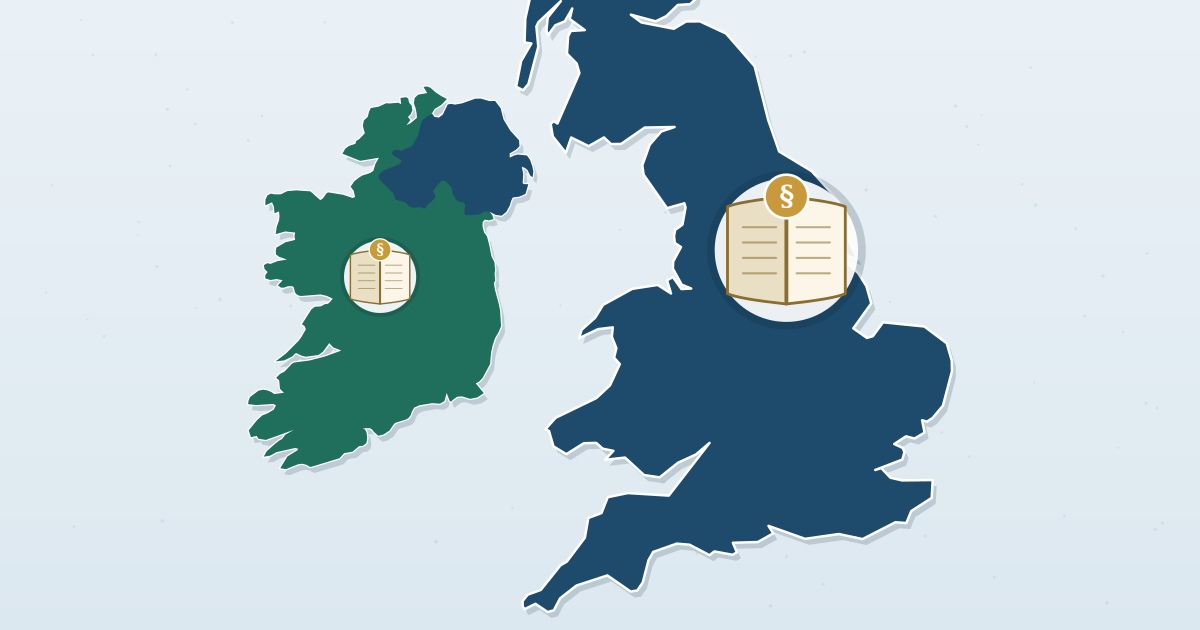
In August, the SRA in UK issued a formal warning notice on AI misuse after numerous reports of potential misuse, including cases built on fabricated citations. Around the same time, the Courts Service of Ireland published guidance banning AI-drafted witness statements and affidavits and requiring practitioners to verify and be ready to explain their AI use. Different regulators, same two failure modes: unverified content and leaked confidentiality. Both expect firms to prove control, not simply ban the tools.
Lawyers on both sides of the Irish Sea have now filed submissions built on cases that were never decided and legislation that doesn't exist — handing regulators the evidence they needed to act. Read together, the SRA's and the Courts Service's new guidance tell every firm operating in the UK and Ireland the same thing: the rules haven't changed, but the regulators are done being patient about how they're applied to AI.
This means solicitors are faced with a quality problem. And to have a solid quality control, you need to have the record of raw material and full audit trail to the end product / outcome to be able to adjust the production of the end product, legal advice. Jikotei Kanketsu* needed.
(*A strict internal rule stating that a worker must never pass a defective piece or poor quality work on to the next process in Toyota Production System)
The UK: the SRA draws a line
The SRA's warning notice, published on 17th August 2026, followed multiple reports of potential AI misuse in a year, with investigations ongoing. It flags two risks: AI "hallucinations" — fabricated citations and confidently wrong analysis, as seen in the High Court's Ayinde v London Borough of Haringey ruling — and the loss of client confidentiality when information is typed into inadequately secured AI tools.
AI is already benefiting consumers and legal professionals. However, the use of AI does not diminish or transfer solicitor's professional responsibilities. Solicitor remains accountable for all work and advice delivered to clients, whether or not AI has been used in its preparation. The SRA isn't writing new rules for AI — it's confirming the existing ones still apply in full, and expects firms to have governance in place that can prove it.
Ireland: the Courts Service sets the ground rules
The Courts Service of Ireland's guide is more procedural but lands in the same place. AI tools "may produce inaccurate, outdated or biased information" and can "make up fake cases, citations or quotes" while looking entirely convincing — and identical questions can produce different answers on different occasions. "You are responsible for what you file," the guide states; practitioners must independently verify every case and source cited, as AI chatbots are not qualified lawyers.
Generative AI cannot be used to draft the substantive content of witness statements or affidavits at all — deponents must now sign a declaration that AI "has not been used for the purposes of generating the substantive content." The guide also warns that "anything you enter into a generative AI tool may not be private or confidential," and that practitioners should be ready to explain how AI was used and verified. Non-compliance can mean cost orders, dismissed claims or struck-out defences.
One compliance problem, two regulators
Strip away the procedural differences and both regulators are describing the same failure modes — unverified / hallucinated content and information that left the building — and the same fix: not a ban on AI, but proof of control. "I didn't know what my associate typed into ChatGPT" is no longer an acceptable answer in either jurisdiction.
How NROC Security helps
NROC Security gives firms real-time visibility into which GenAI applications are in use, with policy guardrails that can automatically block or redact client-confidential and privileged data before it reaches a public AI platform. Policies can be applied by user/group, AI App and use case, and every decision is logged — giving firms the auditable evidence of oversight the SRA expects, and the concrete answer to "how was this checked" that the Courts Service asks for, without blocking the productivity gains AI already delivers. This means solicitors don't need to choose between using AI and meeting their professional obligations. Regulators on both sides of the Irish Sea are clear that firms are accountable for what their people do with these tools. The answer is visibility and controls that let compliance teams allow safe, supervised use — and evidence to show a regulator or a court they're doing so. Once privileged information is typed into an open AI tool, a firm may have permanently waived that privilege. NROC Security platform stops that at the point of use, rather than relying on policy documents fee-earners may never read.
Ready to see whether your firm's current GenAI usage would stand up to an SRA inquiry or a judge's questions? Get a briefing about our Assessment Mode — a read-only deployment that shows you exactly which AI tools your people are using, and where the gaps are, before you change a single policy.